Periodontal Care in Lancaster, NY

Healthy gums do more than keep your smile looking good. They help support your teeth and the bone around them. When gum disease develops, it can cause inflammation, bleeding, gum recession, and, in more advanced cases, damage to the structures that hold your teeth in place.

At White Maple Dental in Lancaster, NY, periodontal care focuses on identifying gum problems early and treating them before they become more difficult to manage.

Four dental professionals in black scrubs standing on grass outside White Maple Dental office building with light green siding and large windows.
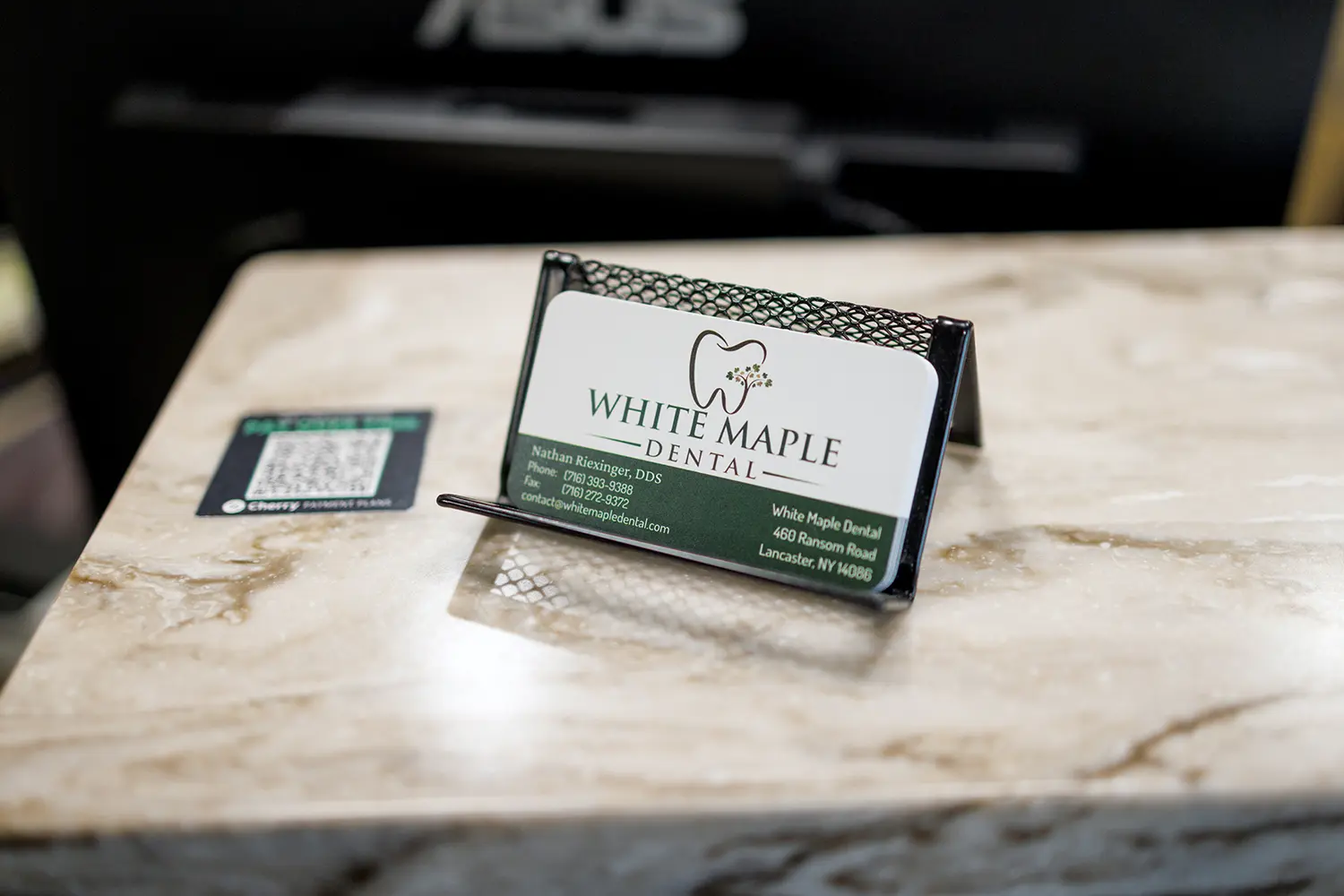
White Maple Dental business card in a black mesh holder on a marble surface, showing contact details for Nathan Riexinger, DDS, in Lancaster, NY.

What Is Periodontal Care?

Periodontal care is the diagnosis, treatment, and ongoing management of conditions affecting the gums and other tissues that support your teeth.

The most common conditions are gingivitis and periodontitis.

Gingivitis is an early form of gum disease. The gums may become red, swollen, or prone to bleeding, especially during brushing or flossing.

Periodontitis is more advanced. Over time, infection and inflammation can affect the bone and tissues supporting the teeth. Without treatment, periodontal disease can contribute to gum recession, bone loss, loose teeth, and tooth loss.

The good news is that gum disease can often be managed more effectively when it is identified early.

What Are the Signs of Gum Disease?

Gum disease does not always cause noticeable discomfort, so it is possible to have a problem before you realize something is wrong.

Signs can include:

  • Bleeding when brushing or flossing
  • Red, swollen, or tender gums
  • Persistent bad breath
  • Gums pulling away from the teeth
  • Increased tooth sensitivity
  • Loose or shifting teeth
  • Changes in the way your teeth fit together
  • Visible changes in the gumline

If you notice these changes, it is worth bringing them up at your next dental appointment rather than waiting for the problem to become painful.

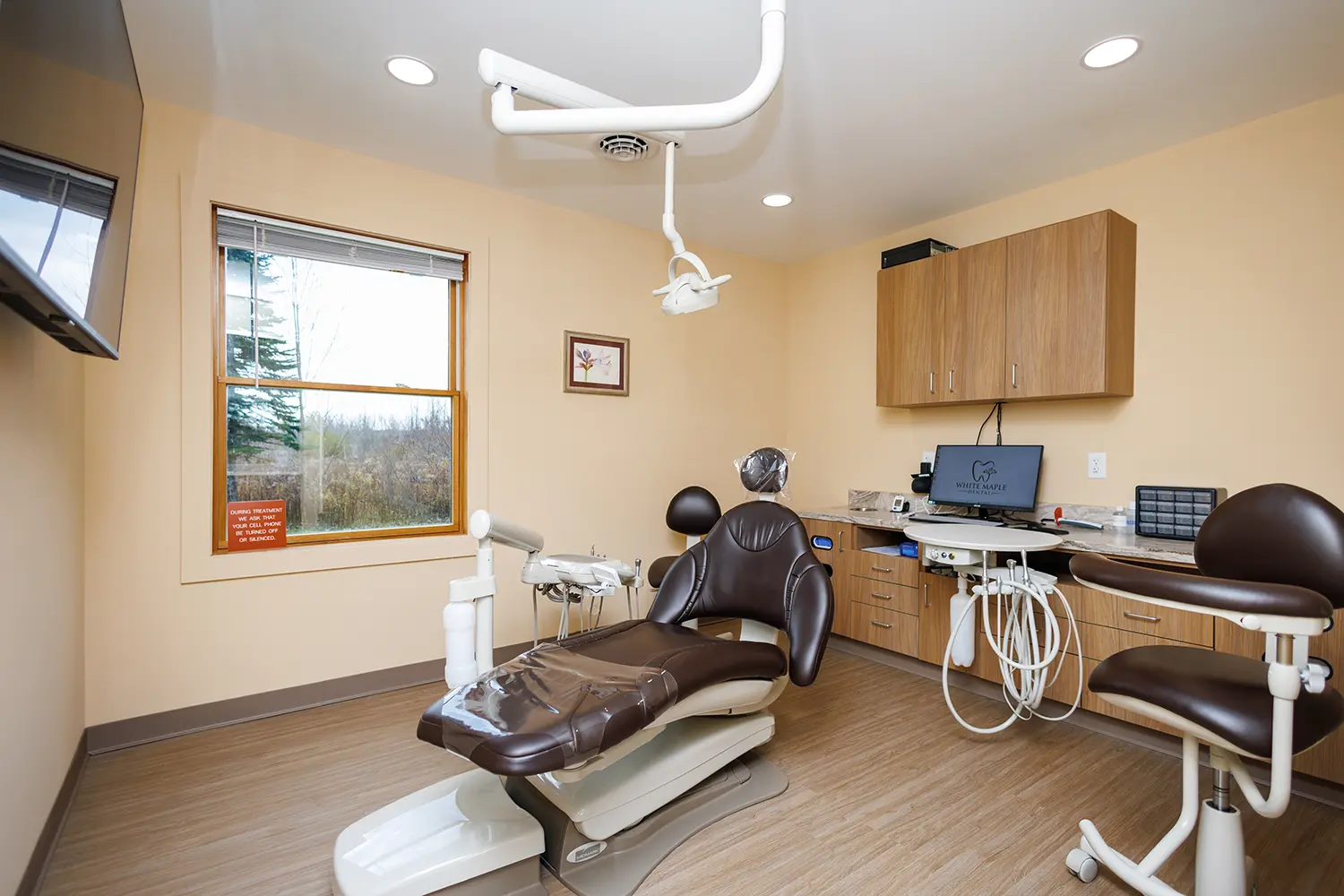
Modern dental exam room with brown dental chair covered in protective plastic, overhead dental light, wooden cabinets, a monitor displaying White Maple Dental logo, and window showing outdoor trees and bushes.

What Causes Periodontal Disease?

Plaque buildup is one of the main contributors to gum disease. Plaque is a sticky film of bacteria that forms on the teeth. When it is not removed effectively, it can irritate the gums.

Over time, plaque can harden into tartar, which cannot be removed with regular brushing alone.

Other factors can also affect gum health, including oral hygiene habits, smoking or tobacco use, certain health conditions, and individual risk factors.

Regular dental visits make it easier to identify changes in your gums before they progress.

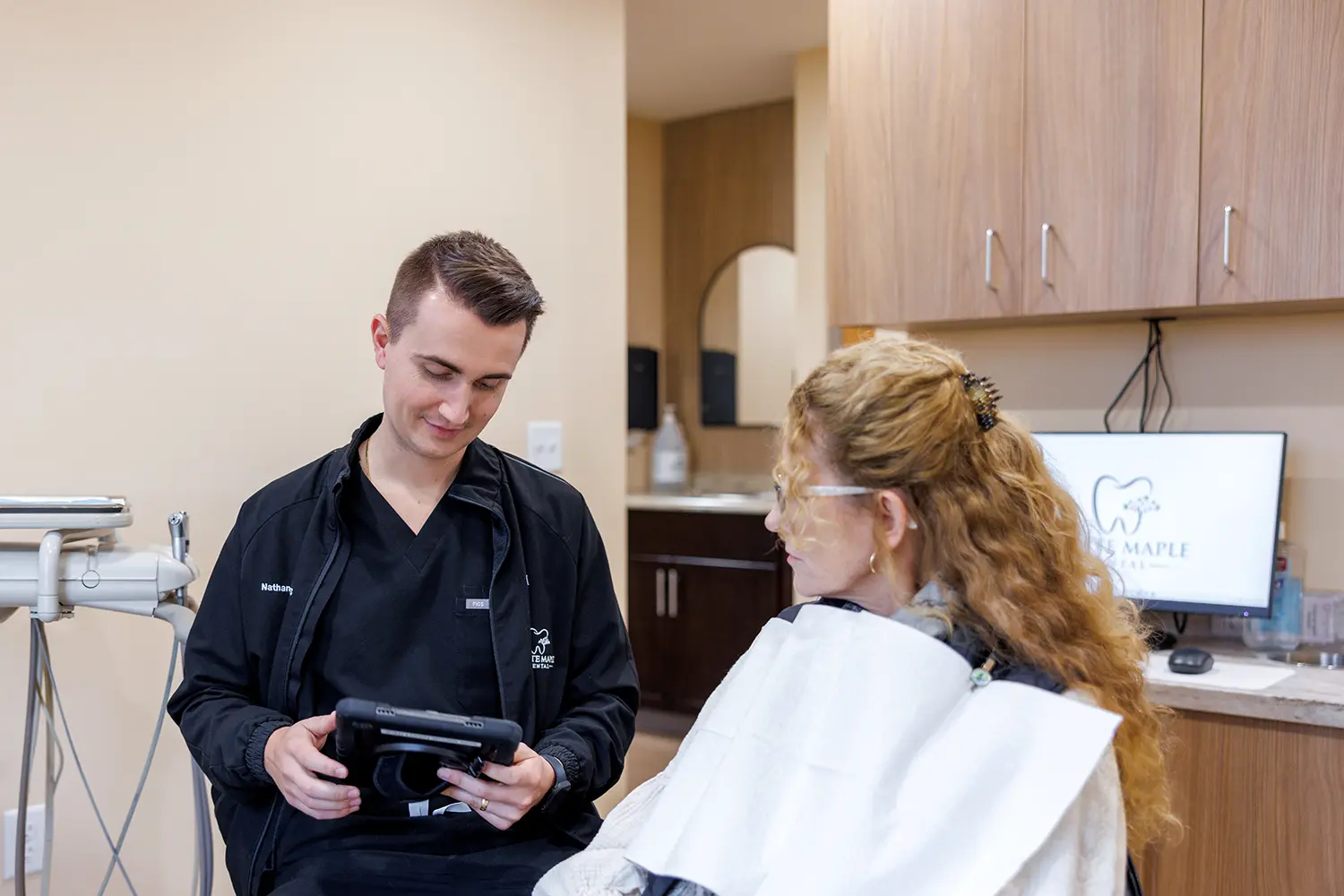
Male dentist wearing black scrubs and jacket, holding a tablet, sitting next to a female patient with curly red hair and protective glasses in a dental office.

How Is Gum Disease Diagnosed?

A periodontal evaluation may include looking at the gums for signs of inflammation, recession, bleeding, or other changes. Your dentist may also check the areas around the teeth and evaluate the supporting bone when appropriate.

The goal is to determine whether gum disease is present and how advanced it may be. That information helps determine what type of treatment makes sense.

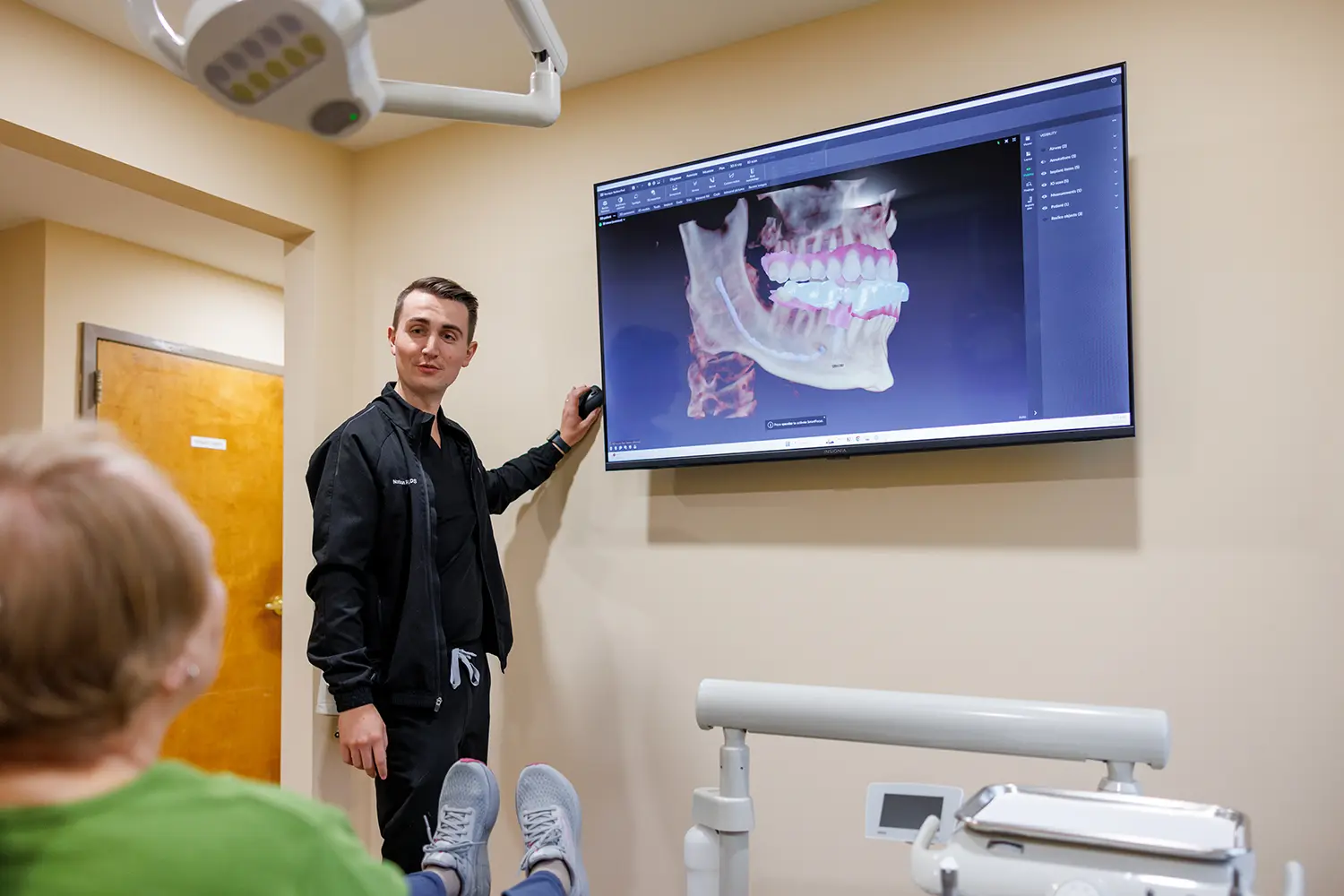
A dental professional in black scrubs stands beside a wall-mounted monitor displaying a 3D dental scan of a jaw with teeth, explaining it to a patient seated in a dental chair.

What Treatments Are Used for Periodontal Disease?

Treatment depends on the condition of your gums and how advanced the disease is.

Scaling and Root Planing

Scaling and root planing is a nonsurgical treatment used to remove plaque and tartar from below the gumline and smooth the surfaces of the tooth roots.

Removing these deposits gives the gums a cleaner surface to heal against and can help control periodontal infection.

Periodontal Maintenance

Patients who have experienced periodontal disease may need ongoing periodontal maintenance after active treatment.

These visits help monitor the gums and remove buildup before it can contribute to another flare-up.

Periodontal maintenance is not the same as simply waiting for symptoms to return. Regular monitoring is an important part of managing a history of gum disease.

Treatment for Gum Recession

Gum recession occurs when gum tissue pulls away from the tooth, exposing more of the tooth surface. Depending on the cause and severity, treatment may focus on controlling the underlying problem and protecting the affected area.

If a more specialized periodontal procedure is appropriate, your dentist can discuss the next step with you.

Smiling elderly woman in a green sweater with butterfly patterns sitting in a dental chair, facing a person in a black jacket in a dental office.

Why Is Periodontal Care Important for Your Natural Teeth?

Your gums and the bone surrounding your teeth provide important support. As periodontal disease progresses, that support can be damaged.

Treating gum disease is therefore about more than addressing bleeding or swollen gums. The goal is to help protect the structures that support your natural teeth.

Early evaluation can also make it easier to determine what treatment is appropriate before the condition becomes more advanced.

Periodontal Health and Dental Implants

Healthy gums and adequate bone support are important considerations when planning for dental implants.

If you are missing a tooth or considering an implant, periodontal health is part of the overall picture. Existing gum disease may need to be addressed before or alongside implant treatment.

White Maple Dental provides dental implant treatment in Lancaster, including implant placement and maintenance. You can learn more about dental implants in Lancaster, NY if you are considering replacing a missing tooth.

Male dentist wearing black scrubs and jacket, holding a tablet, sitting next to a female patient with curly red hair and protective glasses in a dental office.

When Should I See a Periodontist?

A general dentist can diagnose and manage many periodontal conditions. In some cases, however, a referral to a periodontist may be appropriate.

This may be considered when gum disease is advanced, when specialized periodontal treatment is needed, or when a case requires expertise beyond the treatment available in a general dental office.

If a referral would be appropriate for your situation, your dentist can explain why and discuss the next step.

How Can I Keep My Gums Healthy?

Daily habits play an important role in preventing and managing gum disease.

A few basics make a difference:

  • Brush your teeth twice a day.
  • Clean between your teeth regularly.
  • Keep up with routine dental visits.
  • Follow recommended periodontal maintenance appointments if you have a history of gum disease.
  • Tell your dentist if you notice bleeding, recession, sensitivity, or changes in your teeth or gums.
  • Avoid tobacco products, which can increase the risk of gum problems.

Good home care does not replace professional dental cleanings and examinations, but the two work together.

A smiling woman with glasses, curly hair, a black vest, and a patterned scarf standing and talking to a receptionist behind a desk with two computer monitors in an office setting.
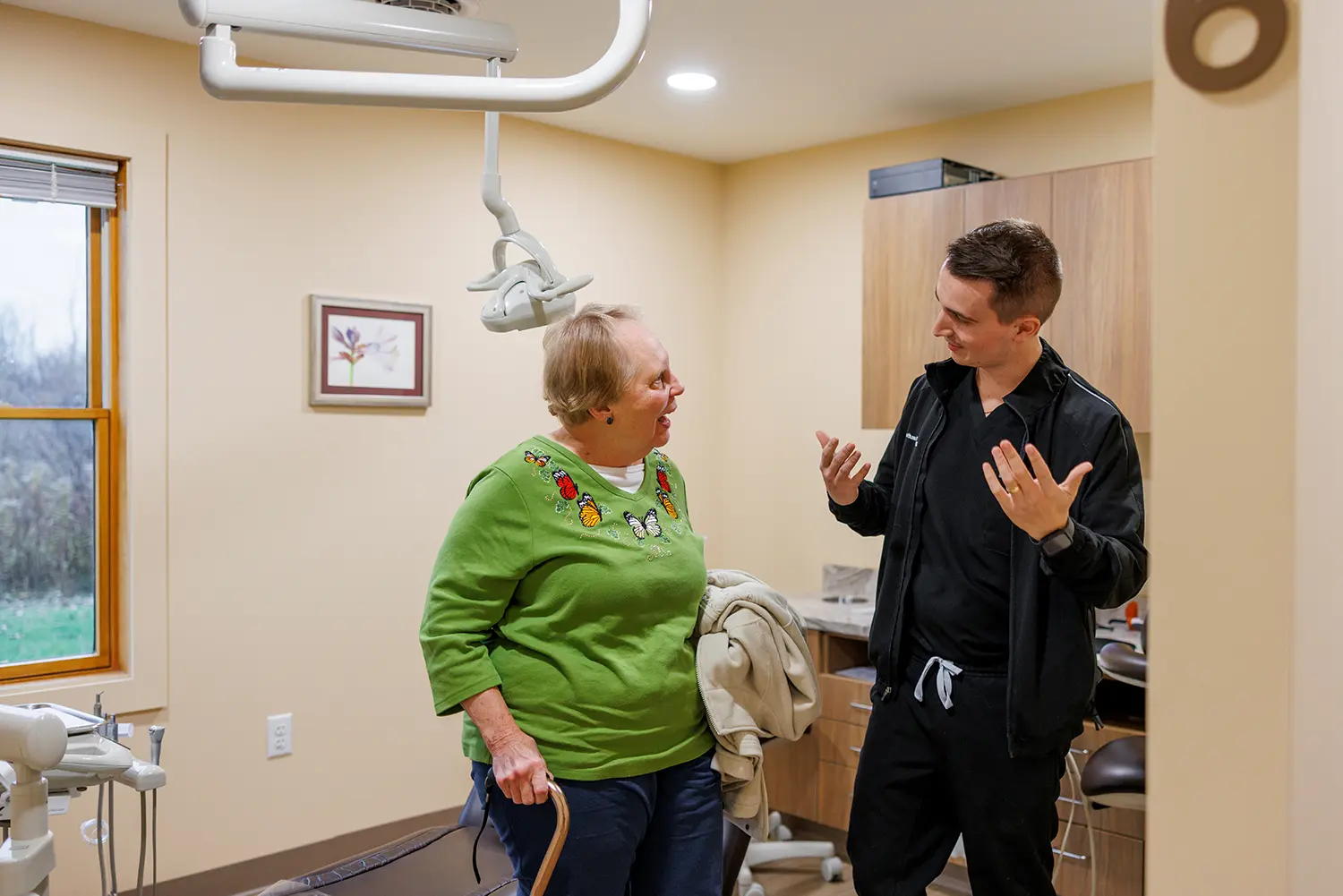
An older woman with a cane and a green butterfly-patterned shirt talking and smiling with a young male healthcare professional wearing black scrubs in a medical office with dental equipment.

Periodontal Care at White Maple Dental

White Maple Dental provides periodontal care for patients in Lancaster, NY, with treatment based on the condition of their gums and supporting structures.

Dr. Nathan Riexinger grew up in Lancaster and returned to the area after graduating from the University at Buffalo School of Dental Medicine.

If you have noticed bleeding gums, gum recession, persistent bad breath, or another change in your oral health, bring it up at your next visit. You do not need to wait until the problem becomes painful.

For patients who also need other dental treatment, periodontal health can be considered as part of their overall dental care. You can also learn more about preventive dentistry at White Maple Dental.

Ready to Take a Closer Look at Your Gum Health?

If you have noticed bleeding, swelling, gum recession, sensitivity, or another change in your gums, schedule an appointment with White Maple Dental in Lancaster, NY.

Frequently Asked Questions About Periodontal Care

Can gum disease go away on its own?

Early gum inflammation can often be improved with better oral hygiene and professional dental care. More advanced periodontal disease generally requires professional treatment and ongoing monitoring.

What are the first signs of gum disease?

Bleeding gums, redness, swelling, tenderness, persistent bad breath, and gum recession can all be signs of gum disease. Some people have few noticeable symptoms, which is why routine dental examinations are important.

Can periodontal disease cause tooth loss?

Advanced periodontal disease can damage the bone and tissues that support the teeth. If the supporting structures become severely damaged, teeth can become loose and may eventually be lost.

Is scaling and root planing painful?

Scaling and root planing is a nonsurgical periodontal treatment. Your dentist can discuss what to expect during treatment and how any sensitivity or discomfort will be managed.

Do I need periodontal maintenance after treatment?

If you have been treated for periodontal disease, ongoing maintenance may be recommended to monitor your gums and control plaque and tartar buildup.

Can I get dental implants if I have gum disease?

Your gum health should be evaluated before implant treatment. If active periodontal disease is present, it may need to be addressed as part of the implant planning process.

Get Help With Your Gum Health

You do not have to wait for gum problems to become painful before getting them checked.
If your gums are bleeding, receding, swollen, or changing in appearance, contact White Maple Dental in Lancaster, NY. An evaluation can help determine what is causing the problem and whether periodontal treatment is needed.

Dentist in Lancaster, NY | White Maple Dental
Hours
Monday:
7:00 AM – 4:00 PM
Tuesday:
By appointment
Wednesday:
10:00 AM – 6:00 PM
Thursday:
7:00 AM – 4:00 PM
Friday:
By appointment