Dental Implants in Lancaster, NY

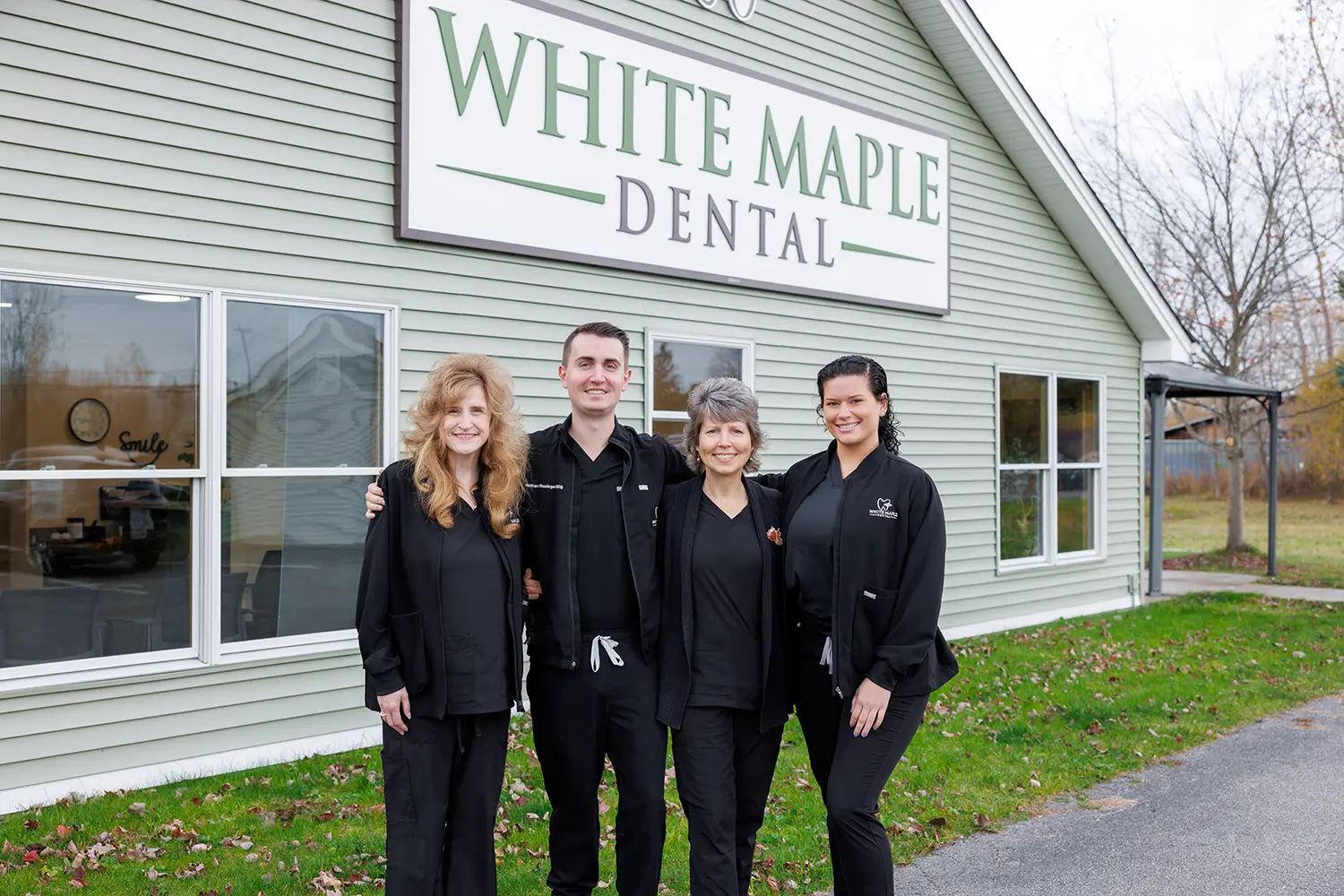
Four dental professionals standing in front of a light green building with a sign that reads 'White Maple Dental,' smiling and wearing black dental uniforms.
Male dentist wearing black scrubs and jacket, holding a tablet, sitting next to a female patient with curly red hair and protective glasses in a dental office.

A Long-Term Option for Replacing Missing Teeth

Missing a tooth can make everyday things like chewing, speaking, or smiling feel different. Dental implants offer a fixed way to replace missing teeth and can support a crown, bridge, or denture depending on your needs.

At White Maple Dental in Lancaster, NY, Dr. Nathan Riexinger can evaluate your oral health and discuss whether dental implants are an appropriate option for replacing one or more missing teeth.

What Are Dental Implants?

A dental implant is a titanium post placed in the jawbone to provide support for a replacement tooth. Once the implant has healed and integrated with the surrounding bone, it can be used to support a custom restoration.

Depending on how many teeth you're missing, implants may support:

  • A crown to replace a single tooth
  • A bridge to replace multiple missing teeth
  • A denture or full-arch prosthesis when many teeth are missing

Dental implants are designed to provide stable support for replacement teeth and can be a long-term option for tooth replacement.

Smiling man in a black jacket with text 'Nathan Riexinger DDS' and a dental logo stands outdoors in front of a building with green siding and a window.

Why Consider Dental Implants?

A missing tooth can affect more than appearance. Gaps can make chewing more difficult, and remaining teeth may shift over time. Bone loss can also occur around an area where a tooth is missing.

Depending on your situation, dental implants may offer several advantages:

A Fixed Replacement

Unlike a removable denture, an implant-supported restoration is designed to stay in place.

Support for Chewing and Speaking

A stable replacement tooth can help restore everyday function after tooth loss.

A Natural-Looking Appearance

The final crown, bridge, or denture can be designed to fit your mouth and blend with your smile.

Replacement Without Relying on Neighboring Teeth

For some single-tooth replacements, an implant-supported crown can replace the missing tooth without using adjacent teeth as the support for a traditional bridge.

The right solution depends on your oral health, the number of teeth missing, and the condition of the supporting bone and gums.

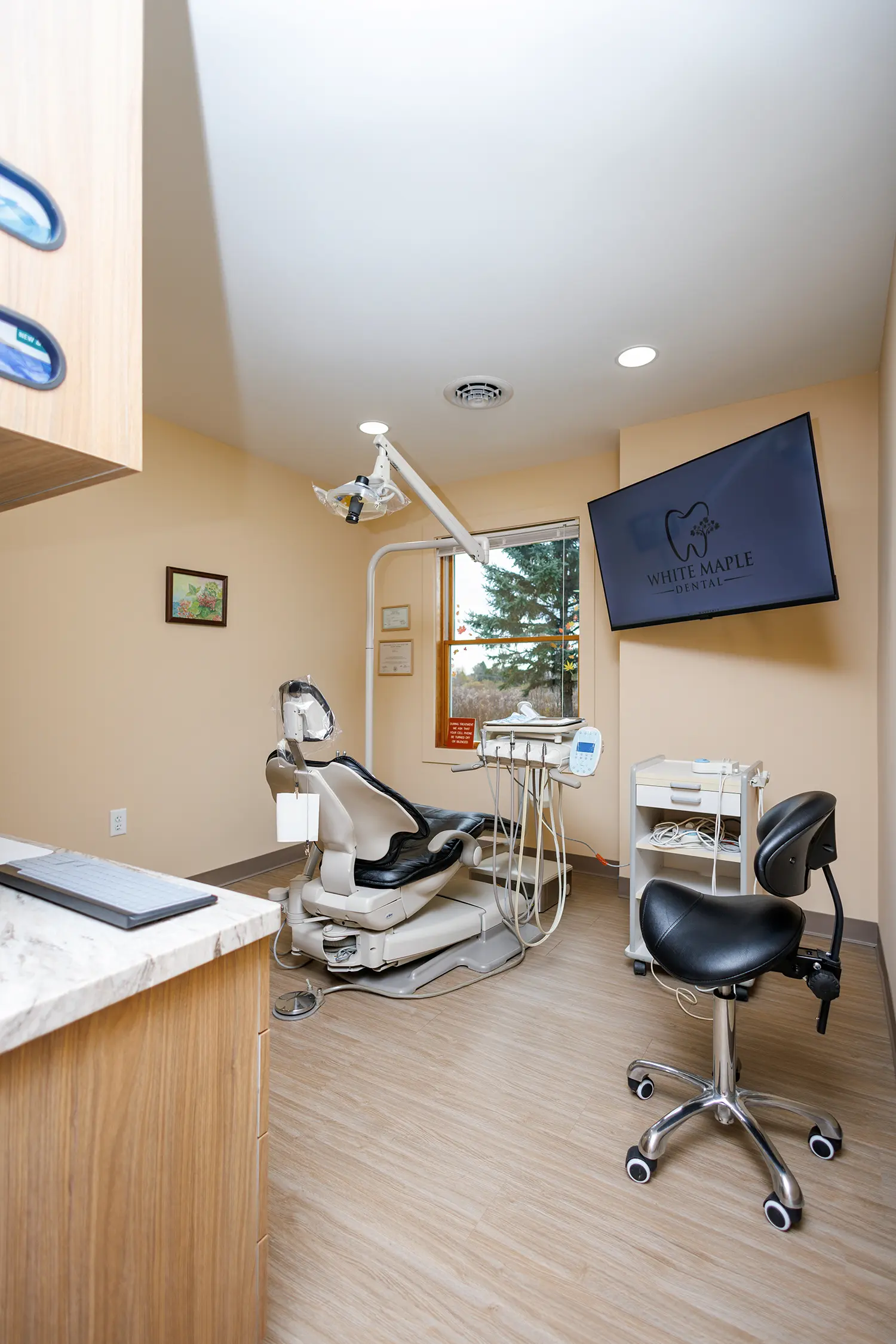
Modern dental exam room with beige walls and light wood flooring, featuring a black and white dental chair, dental tools on a mobile unit, a black rolling stool, a mounted TV screen displaying 'White Maple Dental,' a window with a view of trees, and a desk with a keyboard in the foreground.

What Can Dental Implants Replace?

One Missing Tooth

A single implant can support a custom crown designed to replace one missing tooth.

This can provide a stable replacement while leaving the neighboring teeth independent of the restoration.

Several Missing Teeth

When multiple teeth are missing, implants may be used to support a bridge or other restoration.

The appropriate design depends on the location and number of missing teeth and the condition of your mouth.

Most or All Teeth

For patients who are missing many or all of their teeth, implants can support a full-arch prosthesis or denture.

White Maple Dental's current implant information specifically notes that implants can support bridges and full-arch prosthetics.

How Does the Dental Implant Process Work?

Dental implant treatment generally takes place in stages.

1. Evaluation and Treatment Planning

The first step is determining whether an implant is appropriate for you. Your dentist will evaluate your oral health and the area where the tooth or teeth are missing.

Your overall health, gum health, and available bone can all affect implant treatment and healing.

2. Implant Placement

The titanium implant is surgically placed into the jawbone.

The implant then needs time to heal. During this stage, bone grows around the implant in a process called osseointegration, helping create a stable foundation for the replacement tooth.

3. Placement of the Replacement Tooth

Once healing is complete, the replacement tooth or teeth can be attached to the implant.

For a single missing tooth, this is typically a custom crown. Multiple missing teeth may be replaced with an implant-supported bridge or denture.

Treatment timelines vary. Some patients may need several months for the implant and surrounding bone to heal before the final restoration is placed.

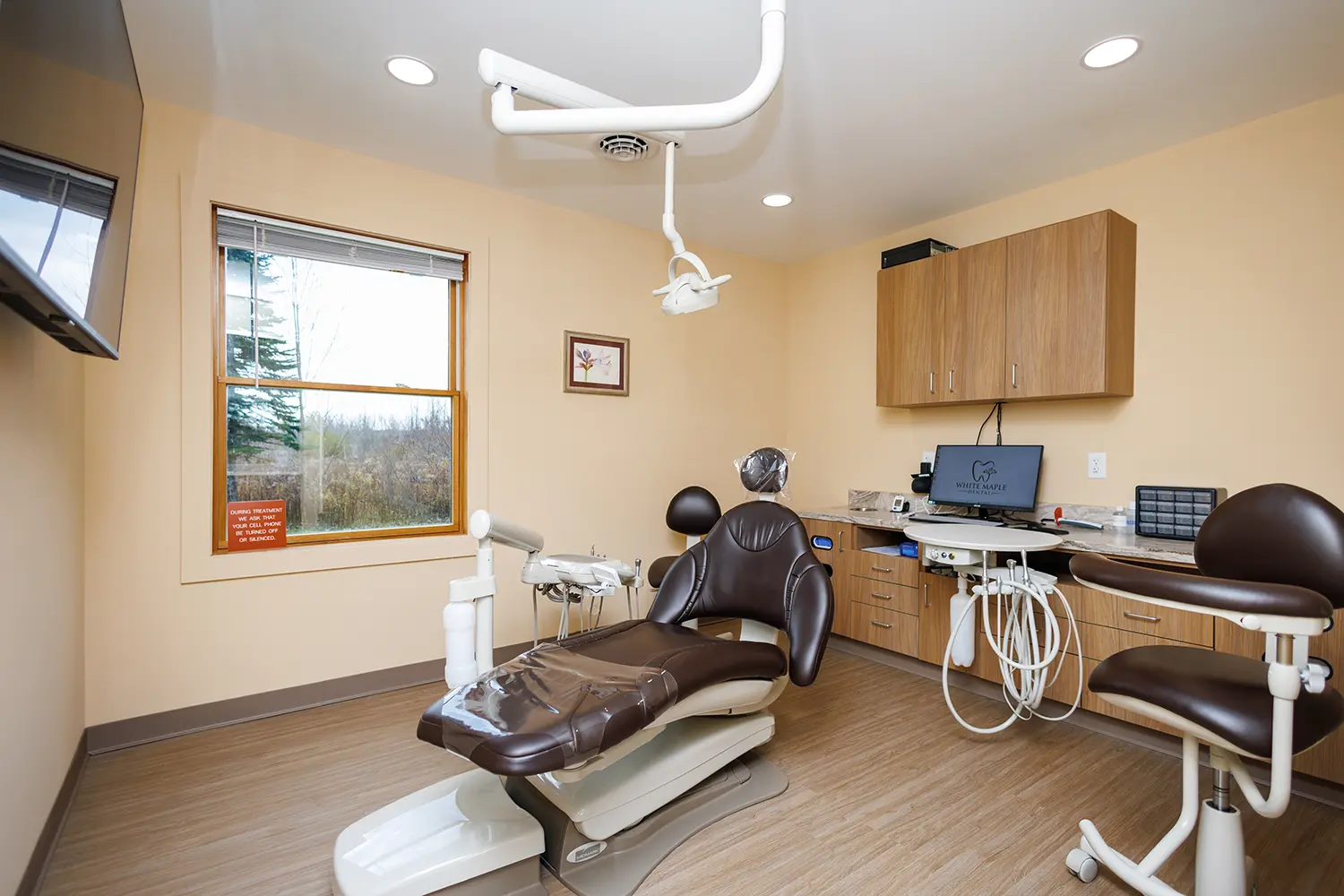
Modern dental exam room with brown dental chair covered in protective plastic, overhead dental light, wooden cabinets, a monitor displaying White Maple Dental logo, and window showing outdoor trees and bushes.
Smiling elderly woman in a green sweater with butterfly patterns sitting in a dental chair, facing a person in a black jacket in a dental office.

Am I a Candidate for Dental Implants?

Dental implants are not automatically right for everyone.

Your dentist will consider factors such as:

  • The condition of your gums
  • The amount and condition of supporting jawbone
  • Your overall health
  • The number and location of missing teeth
  • Your ability to maintain good oral hygiene

Certain health conditions and tobacco use can affect healing and may influence whether implants are appropriate.

That is why an implant consultation is more useful than trying to determine candidacy from an online checklist.

What If I Have Gum Disease?

Healthy gums and supporting bone are important considerations when planning dental implant treatment.

White Maple Dental provides periodontal therapy for gum disease, gum recession, and bone loss, as well as dental implant placement and maintenance.

If gum health needs attention before implant treatment, that can be addressed as part of your overall treatment plan.

Elderly woman with a cane walking and talking with a younger man in black scrubs down a hallway with framed certificates on the wall.
Smiling male healthcare professional in black scrubs talking to a blonde woman wearing glasses, set in a clinical or office environment.

Does Getting a Dental Implant Hurt?

Implant placement is performed with anesthesia to keep you comfortable during the procedure. Some soreness or discomfort afterward can occur as the area heals.

Your dentist will explain what to expect after treatment and provide instructions for caring for the surgical site.

If you're concerned about discomfort, ask about it during your consultation. Knowing what the procedure and recovery involve can make it easier to plan for your treatment.

How Long Do Dental Implants Last?

Dental implants are intended to be a long-term tooth replacement option. How long an implant lasts can vary from person to person.

Good oral hygiene, regular dental visits, healthy gums, and appropriate maintenance all matter.

An implant does not eliminate the need for dental care. The implant and surrounding tissues still need to be monitored and maintained over time.

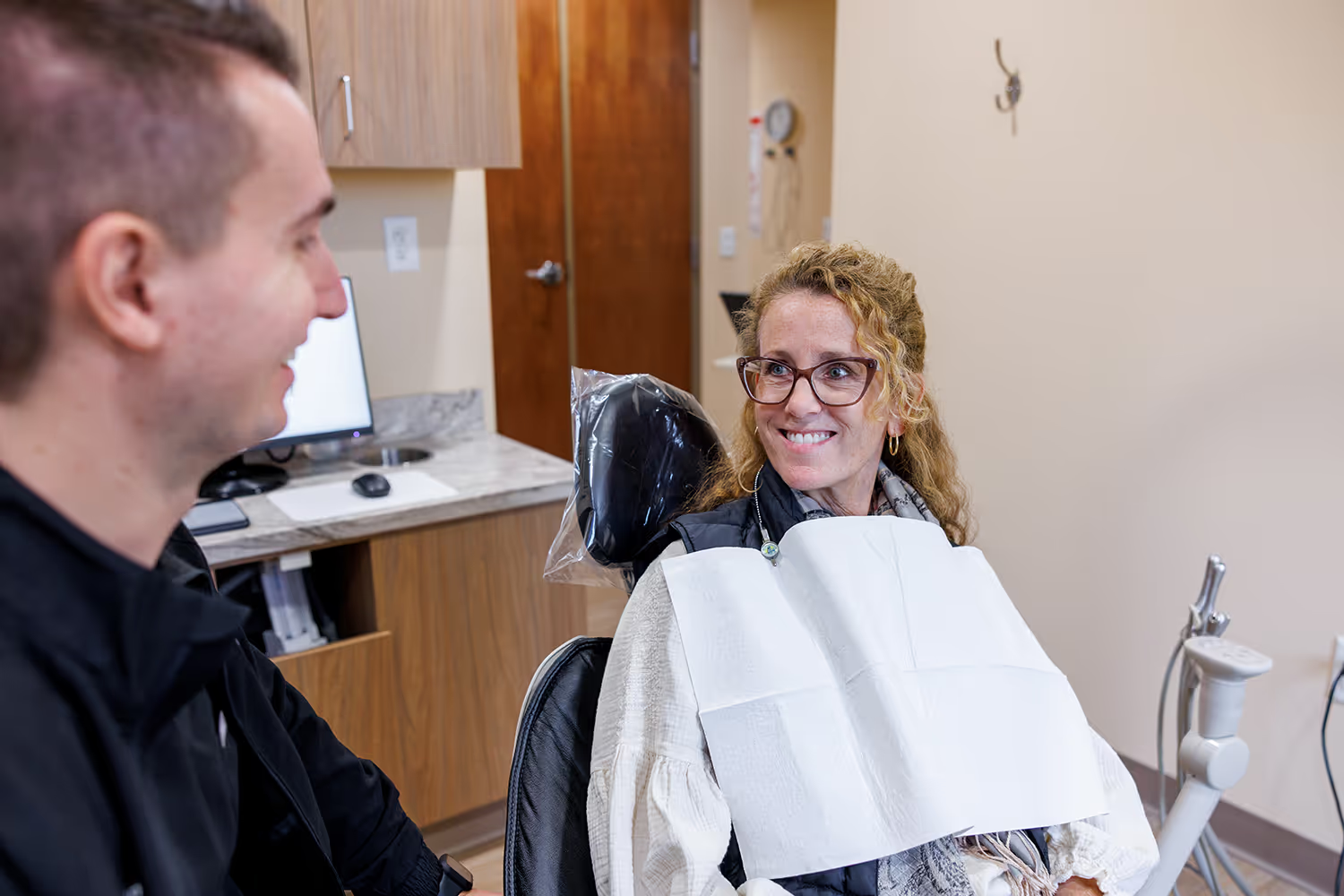
A female dental patient with glasses smiles at a male dentist in a dental office, sitting in a dental chair with a protective bib.

Dental Implants in Lancaster, NY

Dr. Nathan Riexinger grew up in Lancaster and founded White Maple Dental to serve the community where he was raised. The practice provides dental implants along with restorative, periodontal, preventive, and family dental services.

Dental Implant Care for Nearby Communities

White Maple Dental also serves patients from surrounding communities. Learn more about dental implant care for patients in Clarence, NY, Marilla, NY, and Buffalo, NY.

If you're missing a tooth or several teeth, the first step is a conversation about what's possible for your particular situation.

Frequently Asked Questions About Dental Implants

Are dental implants safe?

Dental implants are an established treatment for replacing missing teeth. Whether they are appropriate for you depends on your oral and overall health, so an evaluation is necessary before treatment.

Can dental implants replace multiple teeth?

Yes. Implants can support bridges and full-arch prostheses when multiple teeth are missing. The appropriate approach depends on your individual situation.

How long does dental implant treatment take?

Treatment timelines vary. After an implant is placed, the surrounding bone needs time to heal and integrate with the implant. This healing period can take several months before the final replacement tooth is attached.

Can anyone get dental implants?

No. Candidacy depends on factors including oral health, gum health, supporting bone, overall health, and other individual circumstances. Your dentist can determine whether implants are appropriate for you.

What happens if I don't have enough bone?

The amount and condition of available bone are part of the implant evaluation. If bone support is a concern, your dentist can explain what options are available based on your particular situation.

How should I care for dental implants?

Dental implants still require regular dental care. Maintain good oral hygiene and attend recommended dental visits so your dentist can monitor your implants, gums, and surrounding teeth.

Are dental implants better than dentures?

Neither option is automatically right for everyone. Implants provide fixed support, while dentures are removable. Your dentist can compare the available options based on your oral health, number of missing teeth, goals, and treatment needs.

Talk With White Maple Dental About Dental Implants

If you're considering dental implants in Lancaster, NY, start with an evaluation rather than trying to decide from a list of benefits.
Dr. Nathan Riexinger can assess your situation and explain your options for replacing missing teeth.

Dentist in Lancaster, NY | White Maple Dental
Hours
Monday:
7:00 AM – 4:00 PM
Tuesday:
By appointment
Wednesday:
10:00 AM – 6:00 PM
Thursday:
7:00 AM – 4:00 PM
Friday:
By appointment