



Root Canal Therapy in Lancaster, NY

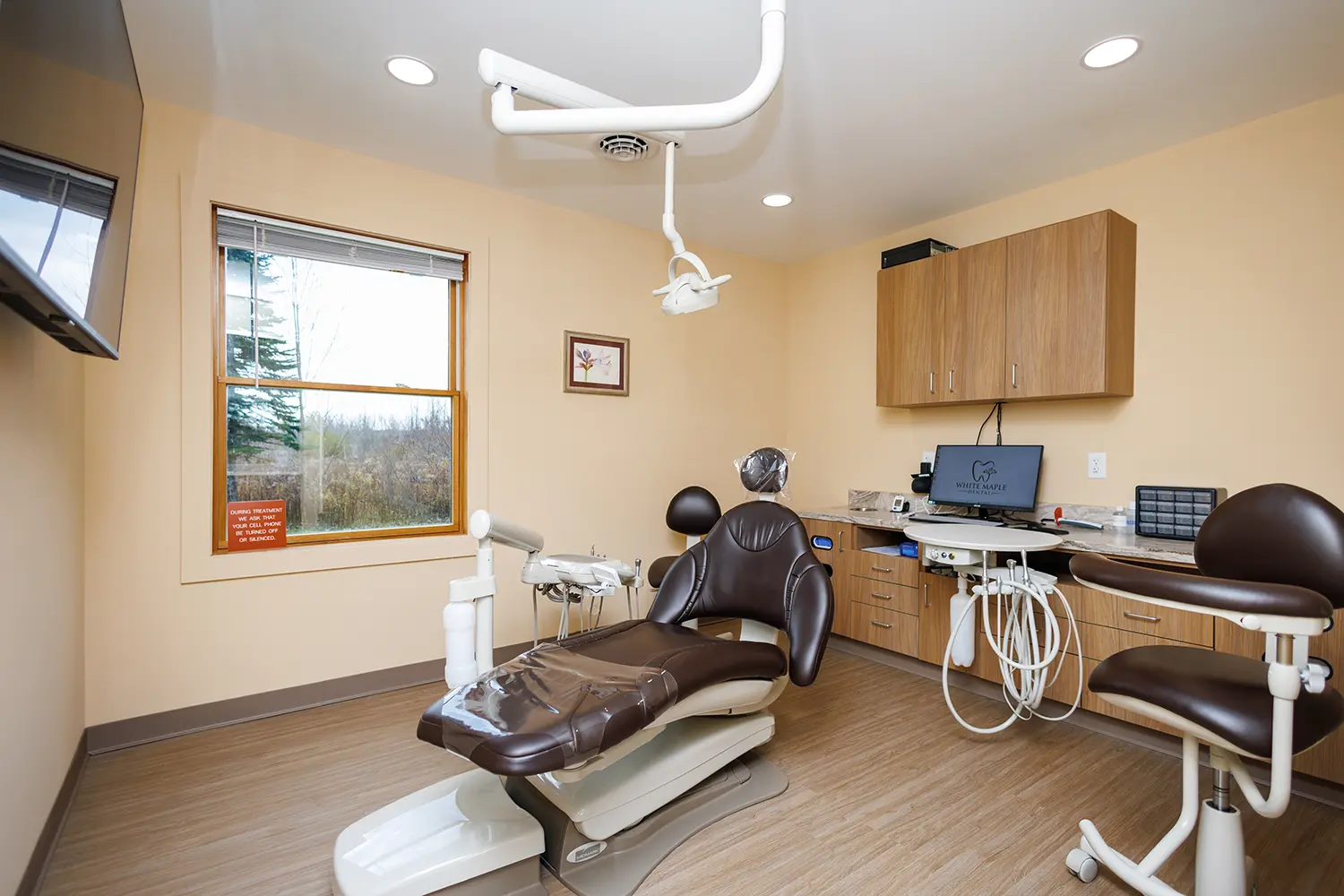
Modern dental exam room with brown dental chair covered in protective plastic, overhead dental light, wooden cabinets, a monitor displaying White Maple Dental logo, and window showing outdoor trees and bushes.
A smiling woman with glasses, curly hair, a black vest, and a patterned scarf standing and talking to a receptionist behind a desk with two computer monitors in an office setting.

Treat Tooth Pain at the Source

A severe toothache, lingering sensitivity, or swelling near a tooth can be a sign that something is happening below the surface. When the soft tissue inside a tooth becomes inflamed or infected, root canal therapy may be able to treat the problem without removing the tooth.

At White Maple Dental in Lancaster, NY, Dr. Nathan Riexinger and our team can evaluate the tooth, explain what is causing your symptoms, and determine whether root canal treatment is the right option.

If you are dealing with sudden or severe tooth pain, White Maple Dental also provides same-day emergency dental care when availability allows.

What Is Root Canal Therapy?

Inside each tooth is soft tissue called dental pulp. It contains nerves, blood vessels, and connective tissue.

Deep decay, cracks, repeated dental work, or an injury can sometimes cause this tissue to become inflamed or infected. When that happens, repairing only the outside of the tooth may not solve the problem.

During root canal treatment, the affected pulp is removed. The space inside the tooth is then cleaned, shaped, filled, and sealed.

After treatment, the tooth is restored with a filling or dental crown when appropriate. The goal is to treat the problem inside the tooth while keeping the natural tooth whenever it can be successfully restored.

How Do I Know If I Might Need a Root Canal?

Not every toothache requires root canal treatment. An examination is needed to determine what is causing the problem.

‍

Signs that may warrant a root canal evaluation include:

‍

  • Severe or persistent tooth pain
  • Pain when biting or chewing
  • Lingering sensitivity to hot or cold
  • Swollen or tender gums near a tooth
  • A chipped or cracked tooth
  • Deep tooth decay
  • A small bump on the gums near the affected tooth
  • A tooth that has been injured

‍

Some teeth cause significant pain when the pulp becomes inflamed or infected. Others produce less obvious symptoms.

‍

If you have severe pain or noticeable swelling, contact White Maple Dental for emergency dental care rather than waiting to see whether the problem improves.

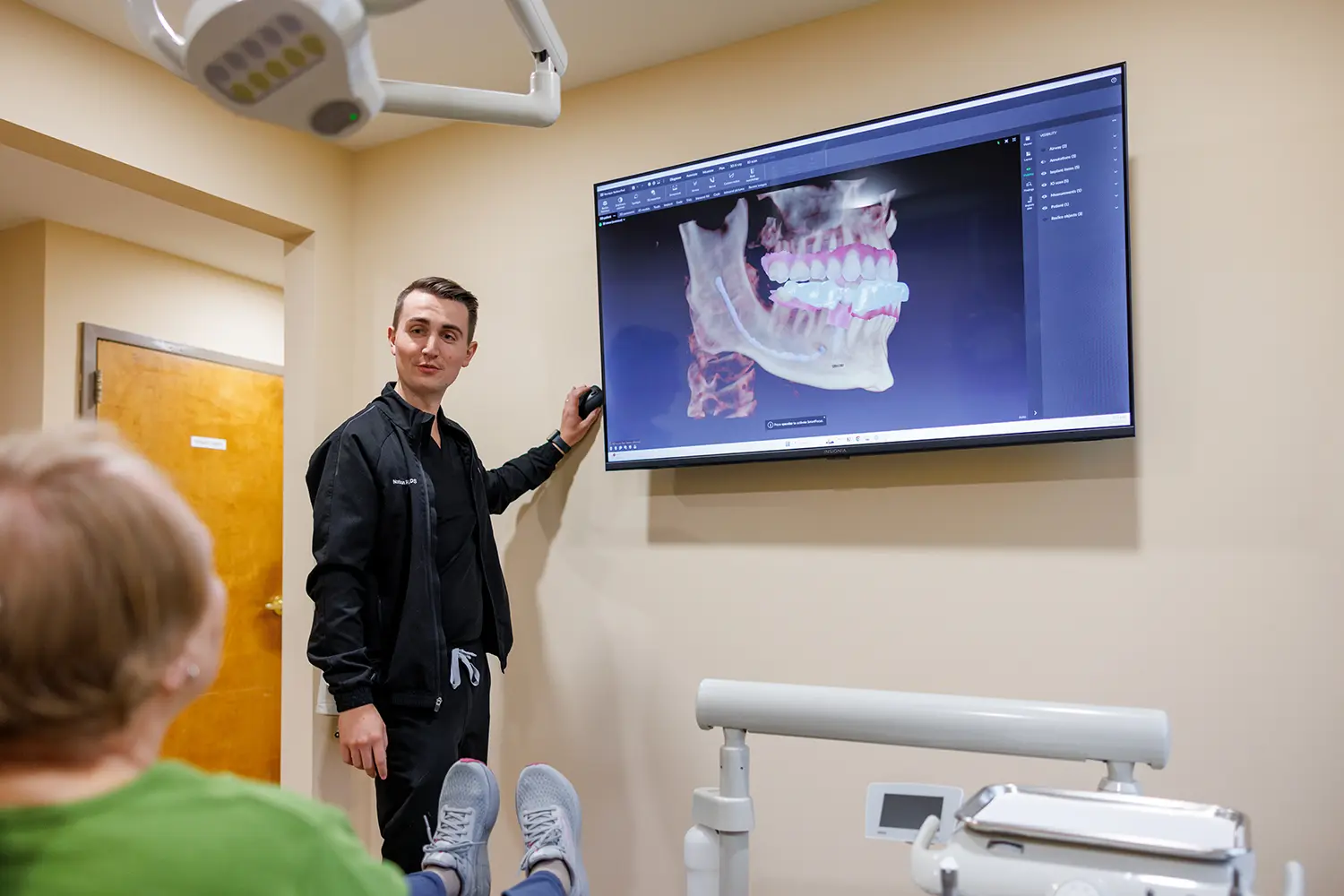
A dental professional in black scrubs stands beside a wall-mounted monitor displaying a 3D dental scan of a jaw with teeth, explaining it to a patient seated in a dental chair.

What Happens During a Root Canal?

Root canal treatment is easier to understand when you know what the appointment is actually addressing.

We Examine the Tooth

Dr. Riexinger will evaluate the tooth and the surrounding area. Dental X-rays may be used to look at the roots and determine the extent of the problem.

The examination also helps determine whether the tooth can be predictably restored or whether another treatment would make more sense.

The Area Is Numbed

Local anesthetic is used to numb the treatment area before the procedure begins.

The Inside of the Tooth Is Treated

The inflamed or infected pulp is removed. The canals inside the tooth are then cleaned and shaped before being filled and sealed.

Root canal therapy can often be completed in one or two visits, although treatment time varies depending on the tooth and the condition being treated.

The Tooth Is Restored

Treating the inside of the tooth is only part of the process. The tooth also needs an appropriate final restoration.

Depending on the location of the tooth and how much healthy structure remains, that may involve a permanent filling or dental crown.

Back teeth such as molars and premolars frequently need the added protection of a crown because they handle greater chewing forces.

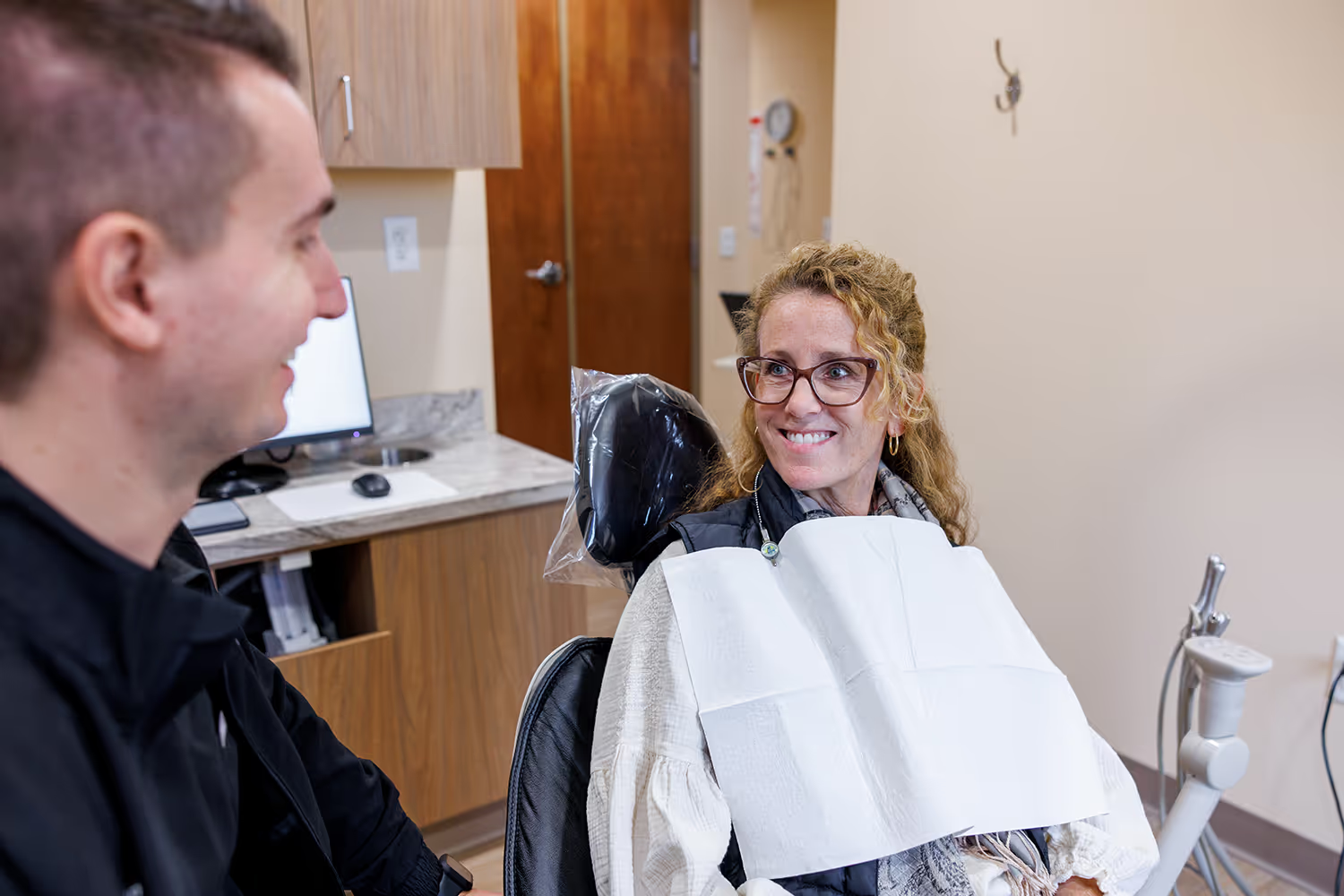
A female dental patient with glasses smiles at a male dentist in a dental office, sitting in a dental chair with a protective bib.

Can Root Canal Treatment Save My Tooth?

Often, yes.

When enough healthy tooth structure remains and the tooth can be successfully restored, root canal therapy may allow it to remain in place rather than being extracted.

Keeping the natural tooth also avoids immediately creating a space that may need to be restored later.

There are situations where a tooth cannot be predictably saved. A severe fracture, extensive damage, or insufficient remaining tooth structure may make tooth extraction a more appropriate option.

You do not have to make that decision before your appointment. The first step is finding out what condition the tooth is actually in.

Root Canal or Tooth Extraction: Which Is Better?

The better treatment depends on the tooth.

If the tooth can be treated and restored successfully, root canal therapy may preserve the natural tooth and its function.

If the tooth is fractured beyond repair or does not have enough healthy structure remaining, removing it may be the better long-term option.

Dr. Riexinger can evaluate the tooth and explain the advantages and limitations of each approach before you decide how to proceed.

A male healthcare professional smiling and talking to an elderly woman wearing a green sweater with colorful butterfly embroidery in a medical office.
Receptionist with curly hair and glasses smiling and speaking to a standing patient at the front desk of White Maple Dental office.

What Should I Expect After a Root Canal?

Your mouth may remain numb for a few hours after treatment. Some tenderness around the tooth can also occur during the first few days.

Follow the aftercare instructions provided by the dental team, and avoid placing unnecessary chewing pressure on a tooth that is still waiting for its final restoration.

Once treatment and restoration are complete, continue brushing, flossing, and keeping up with regular dental visits.

A root canal treats the tissue inside the tooth, but the restored tooth still needs the same ongoing care as the rest of your teeth.

White Maple Dental also provides restorative dentistry, including dental crowns, for teeth that need additional protection or repair.

Root Canal Therapy FAQs

Does a root canal hurt?

Local anesthetic is used to numb the tooth and surrounding area during treatment.

You may feel some pressure during the procedure, and mild tenderness afterward is possible. Root canal therapy is intended to treat the inflamed or infected tissue that may be causing the toothache in the first place.

How long does a root canal take?

Root canal treatment is often completed in one or two appointments.

The exact timing depends on the tooth, its root anatomy, the extent of the problem, and whether additional treatment is needed before the final restoration is placed.

Will I need a crown after a root canal?

It depends on the tooth.

Molars and premolars typically handle greater chewing forces and often need a crown after root canal treatment. Some front teeth may be restored differently depending on how much healthy tooth structure remains.

Your dentist can recommend the appropriate restoration after evaluating the tooth.

Is a root canal better than pulling the tooth?

Neither option is automatically better in every situation.

When a tooth can be successfully treated and restored, keeping the natural tooth may avoid the need to replace a missing tooth later.

If a tooth cannot be predictably restored, extraction may be the healthier option.

Can a tooth hurt after a root canal?

Some tenderness or sensitivity can occur for a few days after treatment and should generally improve.

Contact the office if you experience severe pain, increasing swelling, or symptoms that are getting worse instead of better.

How long can a root canal-treated tooth last?

There is no fixed lifespan for every treated tooth.

How long it lasts can depend on the original condition of the tooth, the final restoration, oral hygiene, and whether the tooth develops decay, fractures, or other problems later.

With appropriate restoration and ongoing dental care, a successfully treated tooth can remain functional for many years.

How much does a root canal cost?

The cost varies because not every root canal involves the same tooth or the same amount of treatment.

The type of tooth, complexity of treatment, and restoration needed afterward can all affect the total cost.

White Maple Dental provides treatment explanations and upfront pricing so you can understand the recommended care before moving forward.

Payment plan options are also available for qualifying patients.

Get Help for Tooth Pain in Lancaster, NY

You do not need to figure out on your own whether a painful tooth needs a root canal.

If you have persistent tooth pain, sensitivity, swelling, or discomfort when chewing, Dr. Nathan Riexinger and the White Maple Dental team can examine the area and explain what is happening.

If root canal therapy is appropriate, we will walk you through the treatment and what the tooth will need afterward.

White Maple Dental is located at 460 Ransom Road, Lancaster, NY 14086.

Dentist in Lancaster, NY | White Maple Dental
Hours
Monday:
7:00 AM – 4:00 PM
Tuesday:
By appointment
Wednesday:
10:00 AM – 6:00 PM
Thursday:
7:00 AM – 4:00 PM
Friday:
By appointment